

Introduction
As I stand here in the wonders of HRM, I sort of realise there are many fundamental aspects of the impact of HRM. I am learning HRM is very administrative and involved with many data and information and this is where e-HRM becomes essential and useful for organisations as it saves time and is cost effective. This blog is about e-HRM applications and AI which is one of the components. Firstly, I have gathered information about e-HRM then briefly explained its features how each one is used for HR analytic. If there are no accesses to measurements and algorithms how the HR professionals can make the correct decisions? Furthermore, I focused on the components of AI and the specific uses of AI in HRM. Through the blog I have emphasised on e-HRM use in IBM and included types of components of AI that IBM is taking in account. And at the end I have included my view of point.
e-HRM
e-HRM involving computer software and hardware and it is the use of digital technology in form of applications to help deliver HRM services for managers and employees. e-HRM activities are the basic human resources information system (HRIS) “it allows managers and employees access to information and is the facility to interact with system to input information” combined with:
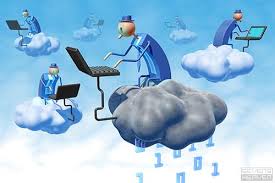
- Cloud computing:
can facilitate group collaboration by providing information and ideas to be shared easily.
- Chatbots (bots):
Are text-based applications and can be accessed via virtual assistants or massaging apps, they can provide personalised learning, tailoring it to needs of individuals learners by answering questions and providing feedback.
- Big data:
Contained of large data that may be analysed to show patterns, trends and associations.
- Social media:
They enable managers and employees communicate by dialogues and used widely in recruitment including giving a “voice” to employees.
- Smart phones:
Facilitate two-way communication, can deliver learning materials, via special apps can deliver (learning on the move), also can be used for recruitment.
- Gamification:
Can be used as a recruitment tool.
- Blockchain:
Noted by Iansiti and Lakhami, ‘it can be involved with dealing with employee problems, employee voice’ for example: Whitehouse (2018) blockchain is powered with anti-harassment for the workplace offered by Vault.
- New digital and mobile tools:
Are being offered by suppliers to support key HR activities and requirement such as:
- Productivity and collaboration like Microsoft skype for teams, Basecamp, Trello and etc.
- Engagement and feedback apps.
- Performance management apps.
- Employee service platforms. offer an integrated service of chatbots and natural language.
Artificial Intelligent
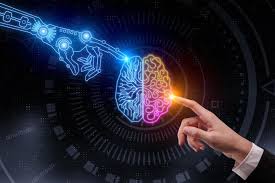
Artificial Intelligence is a component of e-HRM, and it works without programming instead AI learn. It can generate data to empower decision making on people management issues. According to Tata (2018), AI can provide; challenge as much as inform, offer a different perspectives and act as a kind of devil’s defendant to manage stakeholder’s participation and process their views. Noted by, Megan Butler quoted by Jane Sims (2019), AI is really good at thing that human beings are bad at, and human beings are good at things that AI is bad at. Get them together and it’s a great combination.
The components of AI are:
- Machine learning
- Natural language processing
- Deep learning
- Neural networks
e-HRM in IBM
According to IBM, at the heart of the platform is an ecosystem of producers and partners that can form tightly integrated networks powered by technologies such as cloud computing, mobile apps and artificial intelligence (AI). E-learning development has been similarly slow, and typical development can range from 80 to 200 hours, depending on the complexity of content, media and navigation in the design. These lengthy lifecycles are not acceptable in today’s competitive environment. In the learning function, a digital platform model can enable organisations to accelerate time to skill in many ways:
- the learning and development (L&D) function shifts focus to ensure coherent, relevant content is woven together.
- Employees can easily search for and find the right content at the right time, based on a blend of internal and external content providers in the ecosystem.
- New content is shared and updated continuously across the platform, so learners always have access to the most current knowledge.
- A capability, such as machine learning and natural language processing, enable the platform to remember preferences and provide stronger recommendations with every learner interaction.
- Social capabilities can drive curation and quality control better and more effectively.
Personalised learning in IBM
Bite-sized learning, or micro learning, is well suited to meet the needs of today’s professional learners. Talent development leaders will recall the rise of this approach a decade ago in the early days of e-Learning. Today’s micro learning focuses on specific improvements to address these issues and better align to human cognition. The coherent arrangement of bite-sized learning with accompanying activities greatly enhances learning engagement and learning efficacy.
Bite-sized content:
• Created in single concept “bites”
• Developed at speed and scale within the learning ecosystem
• Prioritises the how-to in direct language and rich media
• Arranged for the learner incoherent sequences
• Draws connections to related content to deepen knowledge
• Delivers content that is always up-to-date and easily refreshed
• Enables personalisation through individual curation of content
• Activates “memory retrieval” factors to help retention
IBM OpenPro ERP Payroll and Human Resources HRMS HR HRIS 9
OpenPro ERP is a web based complete ERP software package that is using open architecture that is now enabled on IBM PureSystems. It includes Financials, Supply Chain Distribution, Customer Relationship Management, E-commerce, Workflow, Knowledge base, Document Imaging and Mfg. HRMS, HR.
Contact Info:
Jim Clark
714-378-4600 Request information
Recruitment in IBM
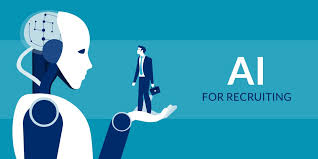
Blair shares that IBM HR introduced four new key roles in its talent acquisition function: Talent Influencer, Talent Scientist, Data Poet, and Scrum Master.
- Talent Influencers serve as business champions and power networkers
- Talent Scientists focus on AI-augmented decision support leveraging industrial-organisational psychology
- Data Poets utilize analytics to function as storytellers and design thinkers
- Scrum Masters lead groups of recruiters through AgileTA sprints.
Conclusion
Data-driven decisions are better decisions it’s as simple as that. Using big data provides managers to decide on the basis of evidence rather than insight. For that reason, it has the potential to revolutionise management, McAfee and Brynjolfsson (2012). I could not say it any better and I absolutely agree with MacAfee and Brynjolfsson however ethical considerations must come into account and paying attention to the AI risks is very vital. By taking into account and focussing on both issues to predict and prevent the adverse impacts on HRM, e-HRM will be unquestionable.
References
IBM (2020) Recruiting 2020: Transforming your talent acquisition process. Available at: https://www.ibm.com/downloads/cas/WMGDAAEE (Accessed: 19 April 2020).
ExpertInsights@IBV (2018) The rise of the digital learning ecosystem: How the platform model is reinventing talent development. Available at: https://www.ibm.com/downloads/cas/O9ZJ2ZXB (Accessed: 19 April 2020).
Global solution directory (2019) IBM: OpenPro ERP Payroll and Human Resources HRMS HR HRIS 9. Available at: https://www356.ibm.com/partnerworld/gsd/solutiondetails.do?&solution=26059 (Accessed: 19 April 2020)
Michael Armstrong and Stephen Taylor (1977) Armstrong’s Handbook of Human Resource Management Practice. 15thedn. London: Kogan Page.
 MBA Blogger
Very useful content, Jane! I’m studying HRM and I wanna shift my career for these area. Your content enhance my knowledge and I’m looking forward to read next posts and be updated about this topic!
LikeLiked by 1 person
Thank you for the comment.
LikeLiked by 1 person