
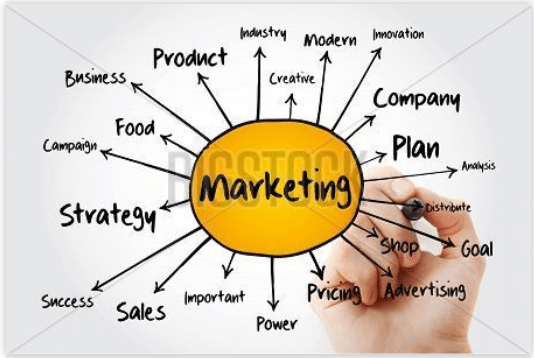
Marketing is shaped by various of models and analytical methods to identify the business issues/risks and opportunities that have negative/positive impacts on business/project objectives. Plus, marketing enables marketers to create a new marketing strategy and implement them efficiently by using the correct promotion tools to achieve the objectives.
Before anything els do you know whats the different between customer and consumer? Perhaps you know, but for those who don’t know, customer is someone who has not purchased and used any of business products or service/s. But, a consumer is who has purchased and used the product/service and still is a buyer.
Users and buyers are consumers and the future purchasers are the customers. Furthermore, stakeholders play very important roles within the organizations. Stakeholders such as, consumers, customers, shareholders, and those who have interest in the business which will have internal and external impacts on the business objectives.
Here in the UK, marketing concept and processes are based on British, French and American marketing themes. From British perspectives ‘the Charted Institute of Marketing’ (Baines, Fill and Page, 2008, cited; CIM, 2001) and American’s ‘the American Marketing Association’ (Baines, Fill and Page, 2008, cited AMA, 2007) marketing definition is described as a management process and activities. CIM and AMA focus on significance of investigating the customers’ needs. CIM is focused on customers’ needs and AMA is focused on handing over value and focusing more on price, product, place, and promotion ‘the 4Ps’ which also address the customers’ needs. The French definition focuses on the requirements to build up an offer of much better customers’ needs. The French concept talks about marketing in a wider community ‘Stakeholders’ instead of just consumers therefore, segmentations and positioning are more the points (Baines, Fill and Page, 2008, cited Levy and Lindon, 2006, p. 5).
Customers:
(Fourali, 2020, cited; Solomon et al., 2006) six honest friends, there are who, when and where, why, how and what. These elements enable marketers to understand the customer’s’ needs (Fourali, 2020). Based on these six elements, for example, F&F Clothing’s demographic is based on age, gender, ethnic, religion. Age target is from one month to 45 years old, for males and females and are designed mostly for European ethnics and non-religious customers, but the home wear clothing range is suitable for all kind of religions and ethnics.
In my next blog you will appreciate how the customers needs and values are measured by exampling Tesco’s F&F Clothing marketing strategy. So it will aid you to smoothly understand the marketing core.
References:
Baines, P., Fill, C. and Page, K. (2008) Marketing. United States: Oxford University press.
Fourali, C. (2020) ‘Selling’, MN7182: Marketing, marketing communications and operations. Classroom slides.
 MBA Blogger