

What is the problem?
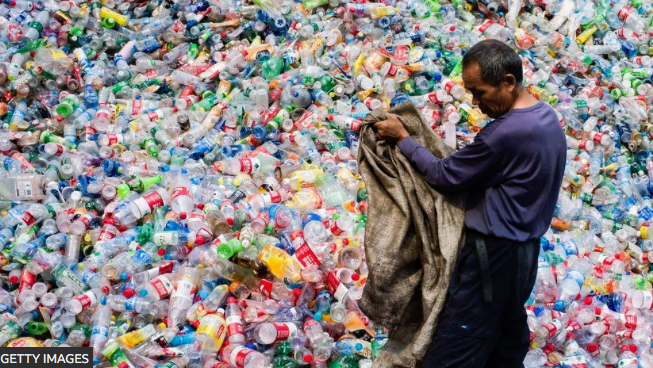
Plastic bottle pollution
McKinsey Sustainability in (2015) reported plastic waste has been increasing continuously. For instance, an estimated 8 million tonnes of plastic waste enters the oceans every year (McKinsey, 2015). TBSG Procurement in (2020) argued about what will happen if we don’t reduce plastic bottle use. The landfills are already filled in with plastic and this will continue to increase plastic pollution in our cities, rivers, sea, and land.
BBC in (2020) reported Coca-Cola, +0.64% was rated the top plastic polluter in 2017 in a survey and Coca-Cola earned the highest income from sold beverage plastic bottles in 37 out of 51 surveyed countries in the world. The Coca-Cola label was found on 13,834 plastic wastes. Plastic waste is rising constantly. Beals in (2017) reported Coca-Cola was the number one world plastic producer in 2017. Staff in (2018) highlighted Coke, PepsiCo and Nestle in order were the world top plastic polluters in 2018. Nace in (2019) highlighted in 2019 Coca-Cola was ranked the world number one plastic polluter in a collecting plastic wastes survey. 475,000 plastic bottle wastes were collected from 52 countries around the globe.
Break Free From Plastic in (2020) highlighted Coke was ranked top plastic polluter in 2020. Break Free From Plastic in (2020) gathered 346,494 items of plastic waste, that 63% belonged to brands like Coca-Cola and is the winner in creating plastic bottle pollution in 2020 again (Brand Audit, 2020). On 25th of October 2021 Coca-Cola and PepsiCo companies ranked number one plastic polluters again for the fifth time (Breakfree From Plastic, 2021).
Also, plastic bottled water bottles have massive impacts on the environment. Parliament.Uk in (2017) cited RECOUP (RECycling of Used Plastics Limited) calculations, UK households use 13 billion plastic bottles per year which 7.7 billion are plastic bottled water that has doubled in the past 15 years. Plastic bottle waste in the UK (House of Commons Environmental Audit Committee, 2017) reported clearing litter and enforcing the law cost the authorities £778 million in 2015/2016.
Plastic bottle waste in the UK (House of Commons Environmental Audit Committee, 2017) reported that the average person in the UK will use 150 bottled water each year and in London is 175 bottles water per person every year. Littering plastic bottles damages our environment, streets, pollutes the sea and rivers, and wildlife. If plastic pollution continues to increase in the sea and rivers, it will vanish by 2050. Turning back the plastic tide “plastic bottles’ House of Commons Environmental Audit Committee in (2017) reported, according to Eunomia recycling plastic bottles produces almost 233,000 tonnes of CO2 emissions per year.
McKinsey Sustainability Stated in (2022) there are barriers to plastic bottle recycling which are 1) Lack of good management 2) Technology errors, 3) process, 4) Material barriers, 5) Shortage in landfills capacity and shortage of recycling companies, 6) High Costs and Time Consuming.
Moreover, plastic bottle’s arenot the only factor posing the identical needs and problems. According to WasteAdvantages Magazine in (2016), single use paper cups are not easy to recycle because they are not 100% made of paper. A layer of polyethylene is added to the paper cups to make them waterproof. And requires a high amount of water to recycle. Further, House of Common Environmental Audit Committee in (2017), reported 2.5 billion coffee cups used every year. There were only 5K Coffee shops, which climbed to 20K in 2017 and forecasted to increase to 30K by 2025 in the UK. So, it’s possible that due to high demands and the UK addiction to coffee the paper cup wastes will radically rise. Accordingly, it’s a future problem and need toward the industry, economy as well the Government, environment, wildlife health and water (HCEAC, 2017).
What is the solution?
Innovation in strategy and models is the key. Instead of applying the same strategy “recycling” over and over, reducing plastic wastes strategy opens doors to tackle the problem. And via innovation in tech to build a new tech to reduce plastic waste radically is the second key.
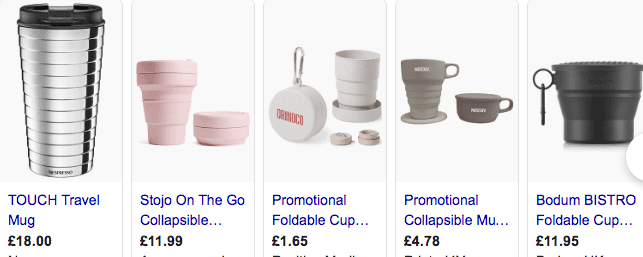
Via innovation, Eco Smart Drink ATM is created which works like any other bank ATM but instead of producing money it provides clean, filtered, chilled and hot drinking water. As well as fizzy and none-fizzy beverages. Adjusted on the street, outside tube and underground stations, airports, shopping malls, food courts and McDonalds. And portable folding mugs as the term presents are foldable and very light which fit in pockets and bags to enable individuals to drink their preferable drinks from. Folding mugs already exist in the market. I have included some pictures to illustrate the foldable mugs in different shapes and sizes.

Having said all above, I need 100 participants to answer my experiment questionnaire which contains only two questions to measure how viable the new tech and the new strategy “reduce plastic bottle usage” is.
Please click on the link below to access the questionnaire.
 MBA Blogger