
The original mandate of Diversity, Equity, and Inclusion (DEI) policies was noble: to eliminate discrimination and cultivate equal opportunities for all. However, when organisations aggressively pivot toward purely subjective, qualitative criteria at the expense of objective merit, the system backfires. Instead of fostering equity, it opens the floodgates for a toxic cultural environment, unreliable performance, and institutional decline.
The Great Paradox: How “Inclusivity” Masks Behavioral Bias
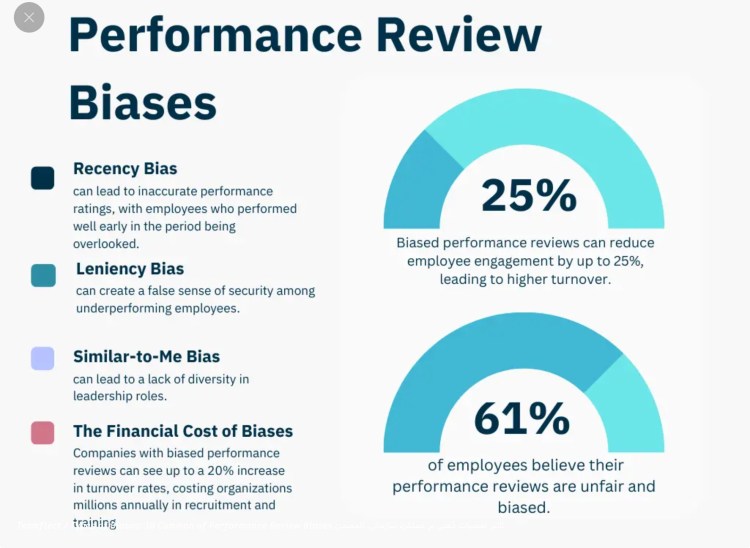
One of the most destructive byproducts of highly subjective DEI frameworks is the rise of profound behavioral biases disguised as progressive values. In environments where performance metrics lack strict formulas, decision-making processes easily devolve into favoritism and “cronyism.”
This subjectivity triggers a destructive chain reaction:
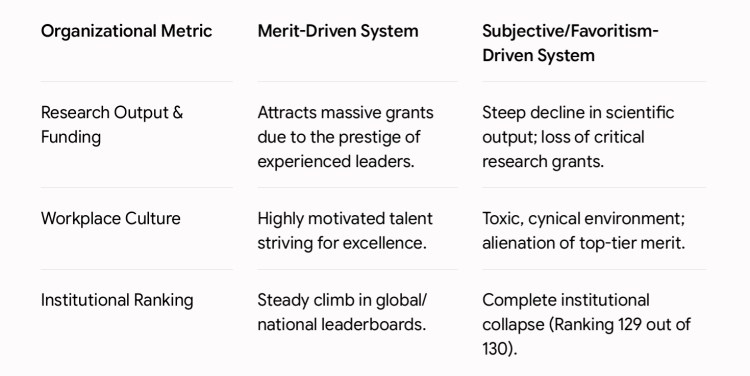
Unreliable Performance: When promotions are decoupled from actual knowledge, proven skills, and deep experience, the operational output of the organisation plummets.
Negative Cultural Environment: High-performing, meritorious employees face systemic discrimination. Watching less-qualified peers gain roles purely based on subjective biases breeds resentment, killing motivation across the board.
Case Study: From Institutional Prestige to 129th Place
To understand the real-world consequences of this shift, we can look at a striking case study from higher education. Out of 130 ranked universities, one particular institution recently plummeted to 129th place—literally second to last. A root-cause analysis reveals that this downfall is directly tied to the highly subjective voting mechanisms used by its academic faculty.
The bias manifested clearly during the appointment of a crucial leadership role: the Director of the Research Department.
The Mechanics of Subjective Bias: Despite the university’s overarching rhetoric on gender diversity which is only focused on empowering women, the voting faculty (primarily female in this context) weaponised the subjective process. Instead of voting for seasoned, highly capable professors with superior research skills and knowledge, they utilised personal, superficial preferences. They voted overwhelmingly for a much younger, conventionally attractive male candidate who possessed significantly less experience and a weaker academic track record.
By prioritising physical appearance and age over academic merit, the department saw an immediate drop-off in research quality, ultimately decimating the university’s national standing.
The Price of Subjectivity: Socio-Economic Fallout
When behavioural bias trumps competence, the socio-economic fallout is devastating and measurable:
Conclusion & Looking Ahead
DEI initiatives can only succeed when anchored to objective, performance-driven KPIs. When diversity policies become a smokescreen for subjective whims, organizations suffer from paralysis, low morale, and terrible socio-economic outcomes.
Coming Up in the Next Blog…
Now, does this mean the traditional, purely objective approach—the one strictly tied to traditional SKAE (Skills, Knowledge, Ability, and Experience) metrics—was flawless? Far from it.
That traditional, objective framework also carried its own set of negative socio-economic outcomes and unsustainable performance traps, which is why many pushed away from it in the first place. However, as bad as those flaws were, they arguably yielded better, more stable results than the chaotic subjectivity we see today.
In my next blog post, I will break down exactly how the traditional SKAE approach failed, its historical negative outcomes, and why neither extreme is the answer. Stay tuned!
References
Boudreau, J.W. (2020) The Risk of Subjectivity in Diversity Initiatives. Harvard Business Review. Available at: https://hbr.org/2020/09/the-risk-of-subjectivity-in-diversity-initiatives [Accessed: 24 June 2026].
Dobbin, F. and Kalev, A. (2016) ‘Why Diversity Programs Fail’, Harvard Business Review, 94(7), pp. 52-60. Available at: https://hbr.org/2016/07/why-diversity-programs-fail [Accessed: 24 June 2026].
Ok, E. (2026) ‘10 Common of Performance Review’, Teamflect. Available at: Biaseshttps://teamflect.com/blog/employee-engagement/types-of-bias-in-reviews [Accessed: 24 June 2026].
Heilman, M.E. (2012) ‘Gender stereotypes and gender discrimination in the workplace’, Research in Organizational Behavior, 32, pp. 113-133. Available at: https://www.sciencedirect.com/science/article/pii/S019130851200007X [Accessed: 24 June 2026].
QS Top Universities (2025) London Metropolitan University: Rankings, Fees & Courses Details. Available at: https://www.topuniversities.com/universities/london-metropolitan-university (Accessed: 24 June 2026).
Sandström, U. and Hällsten, M. (2008) ‘Persistent nepotism in peer-review’, Scientometrics, 74(2), pp. 175–189. Available at: https://link.springer.com/article/10.1007/s11192-008-0211-3 [Accessed: 24 June 2026].
The Complete University Guide (2026) London Metropolitan University Ranking UK 2026 / 2027. Available at: https://www.thecompleteuniversityguide.co.uk/universities/london-metropolitan-university [Accessed: 24 June 2026].
 MBA Blogger